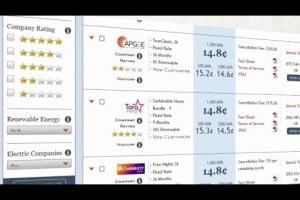
If you have ever stared at a confusing electricity bill and wondered whether you could be paying less, you are not alone. Thousands of households and businesses every year discover that switching to a different electricity provider can save them hundreds of dollars annually. The process of comparing electricity companies does not have to be overwhelming, but it does require a clear strategy, an understanding of your own usage patterns, and a willingness to look beyond the advertised lowest rate. Whether you are a first-time energy shopper or someone looking to renegotiate your current plan, this comprehensive guide will walk you through every step of comparing electricity providers, understanding rate structures, and finding the plan that genuinely fits your needs.
Why Comparing Electricity Companies Is Worth Your Time
In deregulated energy markets across the United States, consumers have the power to choose their electricity supplier. This means that the company generating and delivering your power might not be the same one you are currently locked into. Many people assume that their local utility is the only option, but the truth is that competitive electricity providers constantly enter the market with attractive pricing, renewable energy plans, and customer incentives. Taking the time to compare electricity providers can unlock savings of 10% to 30% on your monthly bill, depending on your region and consumption habits. Beyond price, you also gain access to plans tailored to specific lifestyles, such as green energy packages, fixed-rate contracts that protect against market volatility, and no-deposit options for new customers.
The Financial Impact of Shopping Around
Consider this: the average American household spends roughly $1,400 per year on electricity. Even a modest 15% reduction translates to over $200 in annual savings. Over a three-year contract term, that number compounds significantly. Many consumers leave hundreds of dollars on the table simply because they never bothered to run a side-by-side comparison of available plans in their area.
Key Factors to Compare When Choosing an Electricity Provider
Not all electricity plans are created equal. When you begin comparing energy companies, there are several critical dimensions you need to evaluate before making a decision.
1. Rate Type and Structure
Electricity rates generally fall into three categories:
- Fixed-rate plans — Your cost per kilowatt-hour remains constant for the duration of your contract, protecting you from seasonal and market fluctuations.
- Variable-rate plans — Prices change based on wholesale market conditions. These can be advantageous during low-demand periods but carry risk during peak seasons.
- Indexed-rate plans — Tied to a specific index or benchmark, these plans offer partial transparency but require market awareness.
2. Contract Length and Terms
Contract terms vary widely, from month-to-month agreements that offer flexibility to multi-year fixed contracts that guarantee price stability. Longer contracts often come with signup bonuses or discounted rates, but they also lock you in if market prices drop. Shorter contracts give you freedom but may expose you to rate increases.
3. Renewable Energy Options
More consumers are prioritizing sustainability. Many electricity companies now offer plans powered entirely or partially by wind, solar, and hydroelectric sources. If reducing your carbon footprint matters to you, look for providers with green energy certifications and transparent sourcing disclosures.
4. Fees and Hidden Charges
The advertised rate is rarely the full picture. Early termination fees, monthly service charges, delivery fees, and bill payment surcharges can all inflate your effective rate. Always read the Electricity Facts Label (EFL) carefully before committing.
How to Compare Electricity Rates Effectively
Comparing rates is more than just looking at the cents-per-kilowatt-hour number on a website. To make an apples-to-apples comparison, you need to normalize your data based on your actual usage. Start by pulling your last 12 months of utility bills and calculating your average monthly and annual kWh consumption. Then, multiply that figure by the advertised rate for each plan you are evaluating. This gives you a projected annual cost, which is far more useful than a raw rate comparison.
Next, factor in all applicable fees. A plan with a rate of 11.5 cents per kWh but a $9.99 monthly service charge may actually cost more than a plan at 12.1 cents per kWh with no monthly fee, especially if your usage is moderate. Use an online electricity plan calculator if your chosen provider offers one — these tools automate the math and save you significant time.
| Plan Name | Rate (¢/kWh) | Contract Length | Monthly Fee | Estimated Annual Cost |
| Provider A Fixed 12 | 11.2 | 12 months | $0.00 | $1,344 |
| Provider B Green 24 | 10.8 | 24 months | $5.99 | $1,361 |
| Provider C Variable | 10.5 (avg) | Month-to-month | $0.00 | ~$1,260 (varies) |
| Provider D Fixed 36 | 10.9 | 36 months | $3.50 | $1,380 |
As the table illustrates, the lowest advertised rate does not always translate to the lowest total cost. Contract length, monthly fees, and your personal consumption profile all influence the final number.
Step-by-Step Guide to Switching Electricity Providers
Once you have identified a better plan, the switching process is surprisingly straightforward. Follow these steps to ensure a smooth transition:
- Review your current contract — Check for early termination fees or notice periods that might apply if you are exiting a locked-in plan.
- Gather your usage data — Have your recent kWh consumption ready. This information is essential for getting accurate quotes from competing providers.
- Research available plans in your area — Use comparison websites, state regulatory databases, or directly visit the websites of competitive electricity suppliers.
- Compare at least three to five plans — Narrow your options based on rate, contract terms, renewable content, and total projected cost.
- Read the Electricity Facts Label (EFL) — This document provides the full breakdown of rates, fees, and contract conditions. Do not skip it.
- Enroll with your new provider — Most companies handle the entire switch process for you. Your local utility continues to deliver electricity without interruption.
- Monitor your first few bills — Verify that the new rate is applied correctly and that you are not seeing unexpected charges.
Common Mistakes People Make When Comparing Electric Providers
Even savvy consumers sometimes fall into traps when shopping for electricity. Here are the most common errors to avoid:

- Focusing only on the introductory rate — Many providers offer steep discounts for the first few months, only to raise rates significantly afterward. Always look at the long-term rate or the rate after any promotional period ends.
- Ignoring the EFL — The Electricity Facts Label is the most honest document a provider can give you. Skimming it or skipping it entirely is the fastest way to encounter surprise fees.
- Overlooking customer reviews — A low rate means nothing if the provider has a history of poor billing practices, slow customer service, or unexpected disconnections.
- Choosing a plan that does not match your usage — A plan designed for high-consumption households may not be ideal for a small apartment dweller, and vice versa.
- Forgetting to compare the total cost, not just the unit rate — As demonstrated in the comparison table above, monthly fees and contract terms can shift the cost balance dramatically.
Expert Tips for Getting the Best Electricity Deal

Drawing from years of energy industry experience, here are a few expert-level tips that can give you a serious advantage:
- Compare plans right before your current contract expires — This is when providers compete most aggressively for your business, and you avoid early termination penalties.
- Consider a shorter contract if rates are uncertain — If wholesale electricity prices are trending downward, locking into a long-term fixed contract could mean paying above-market rates for months or years.
- Look for bill credits and sign-up incentives — Some providers offer $50 to $200 in bill credits for new customers, which effectively reduces your first year’s cost.
- Use your smart meter data — If you have a smart meter, you may have access to hourly usage patterns. Some providers offer time-of-use plans that reward off-peak consumption, which can lower your bill further.
Conclusion
Comparing electricity companies is one of the most impactful financial decisions a household or business can make, yet it remains widely underutilized. The process requires some effort — gathering usage data, reading contract terms, and evaluating multiple providers — but the potential savings and improved plan features make it well worth the investment. By approaching your energy shopping with a structured mindset, understanding rate structures, and avoiding common pitfalls, you position yourself to find a plan that is not only cheaper but also better aligned with your consumption habits and values. The energy market will continue to evolve, and the providers who win are the ones that offer transparency, competitive pricing, and genuine value. Do not settle for the default option. Take control of your electricity costs today.
Frequently Asked Questions

How do I find the best electricity company to compare in my area?
Start by visiting your state’s public utility commission website, which maintains a list of licensed electricity providers. You can also use independent comparison platforms that aggregate rates from multiple suppliers. Enter your ZIP code, review the available plans, and focus on the total annual cost rather than just the per-kWh rate.
What is the difference between an electricity supplier and a utility company?
Your utility company owns and maintains the power lines, poles, and infrastructure that deliver electricity to your home. The electricity supplier is the company that generates or purchases the electricity and sells it to you. In deregulated markets, these are separate entities, which is exactly what allows you to compare electricity companies and choose your supplier.
Can I switch electricity providers without service interruption?
Yes. Switching providers does not affect your electricity delivery. Your local utility continues to transmit power to your home, and the only change is the company billing you for the energy consumed. The transition is seamless, and you will not experience any downtime.
What should I look for in an Electricity Facts Label?
The EFL reveals the plan’s average rate, contract term length, early termination fees, percentage of renewable energy, and any additional charges. Compare EFLs side by side when evaluating competing providers to ensure you are making a fully informed decision.
Are fixed-rate electricity plans always the better choice?
Not necessarily. Fixed-rate plans offer price stability, which is valuable when wholesale prices are rising. However, if you anticipate falling prices or plan to move within the contract period, a variable or short-term plan may save you money. Your decision should be based on market conditions, your length of stay, and your tolerance for price uncertainty.