


If you own or manage a commercial building, you already know that your roof is more than just a cover over your head — it is one of the most critical investments protecting your business, your inventory, and your employees. When a commercial roof begins to fail, the consequences can escalate quickly from a minor annoyance to a costly structural emergency. That is why understanding commercial roof repair fundamentals, recognizing early warning signs, and knowing when to call a professional commercial roofing contractor can save you thousands of dollars and countless headaches. This guide breaks down everything you need to know about repairing commercial roofs, from identifying damage to choosing the right materials and repair strategies for your specific situation.
Why Commercial Roof Repair Demands Immediate Attention
Unlike residential roofs, commercial roofing systems are designed to protect large-scale operations — warehouses, retail centers, office complexes, restaurants, and industrial facilities. When a commercial roof develops a leak or structural compromise, it does not just affect the building envelope. It threatens business continuity, inventory, HVAC equipment, and even employee safety. Ignoring a small repair today can lead to mold growth, insulation failure, interior water damage, and eventually a full roof replacement that drains your operating budget.
The average cost of commercial roof repair in the United States ranges from $300 to $2,500 for minor fixes, while major repairs or full tear-offs can exceed $15,000 to $50,000 depending on the roof size, material type, and extent of damage. Understanding these numbers reinforces why proactive maintenance and timely repairs are not optional — they are essential.
Common Types of Commercial Roof Damage and Their Causes

Weather-Related Damage
Severe weather events are the leading cause of unexpected commercial roof damage. High winds can lift membrane edges, hail can puncture single-ply systems, and prolonged UV exposure accelerates thermal expansion and contraction. Even routine storms can exploit existing weaknesses, turning a minor vulnerability into a full-blown leak within hours. Building owners in regions prone to hurricanes, tornadoes, and heavy snowfall should pay special attention to seasonal roof inspections.
Age and Material Deterioration
Every commercial roofing system has a finite lifespan. Built-up roofing (BUR) systems typically last 20 to 30 years, while modified bitumen and single-ply membranes like TPO and EPDM can last 25 to 30 years with proper maintenance. As a roof ages, the material becomes brittle, flashings corrode, and seams weaken. Recognizing the age of your commercial roofing system is the first step in planning a commercial roof repair strategy before a catastrophic failure occurs.
Poor Installation and Workmanship Issues
A surprising number of commercial roof problems trace back to flawed installation. Improper seam welding, inadequate fastening, incorrect slope grading, and poor flashing details all create vulnerabilities that manifest as leaks and ponding water. If your building is relatively young but already showing signs of damage, the root cause may be a shoddy original installation rather than normal wear and tear.
How to Identify When Your Commercial Roof Needs Repair
Catching roof damage early is the difference between a simple patch and a full system replacement. Here are the warning signs every building owner and facility manager should monitor:
- Interior water stains or dripping — especially after heavy rain events
- Standing water or ponding on flat roof surfaces lasting more than 48 hours
- Cracked, blistered, or bubbling membrane surfaces
- Missing or displaced gravel on built-up roofs
- Separated or open seams in TPO, EPDM, or PVC systems
- Rust or corrosion on metal flashings and edge details
- Increased energy costs indicating failing insulation or reflective coating degradation
- Visible sagging or structural deformation in roof deck sections
If you notice any combination of these symptoms, schedule a professional roof inspection immediately. A qualified commercial roofing contractor will perform a thorough assessment that includes infrared moisture scans, core sampling, and visual inspections of all critical detail areas.
Warning Signs Every Building Owner Should Watch For
Some damage indicators are subtle but highly telling. For example, granules accumulating in roof drainage scuppers suggest an aging asphalt-based system losing its protective surface. Similarly, shrinkage cracks on EPDM membranes often indicate UV degradation that has weakened the rubber beyond what a simple patch can address. Facility managers should document these observations with photographs and notes to build a maintenance history that supports insurance claims and resale due diligence.
Top Commercial Roofing Materials and Their Repair Approaches
Different commercial roofing materials require different repair techniques, products, and levels of expertise. Understanding your roof type is essential for getting an accurate repair estimate and a lasting fix.
| Roof Material | Typical Lifespan | Common Repair Method | Average Repair Cost per Sq. Ft. |
| TPO (Thermoplastic Olefin) | 25–30 years | Heat-welded patch, seam reinforcement | $4.50 – $9.00 |
| EPDM (Rubber Membrane) | 25–30 years | Liquid-applied sealant, adhesive patch | $3.50 – $7.50 |
| Modified Bitumen | 20–25 years | Torched patch, cold adhesive repair | $5.00 – $10.00 |
| Built-Up Roofing (BUR) | 20–30 years | Gravel replacement, asphalt patching | $4.00 – $8.50 |
| Metal Roofing | 30–45 years | Panel replacement, sealant application | $6.00 – $14.00 |
| Green/Living Roof | 30–50 years | Membrane patch, drainage restoration | $8.00 – $15.00 |
As the table shows, repair costs vary significantly based on material. Metal roofs and green roofs tend to carry higher per-square-foot repair expenses, but their longer lifespans and durability often justify the investment. TPO and EPDM remain the most popular choices for flat commercial roofs, and their repair processes — heat-welded seams for TPO and adhesive or liquid sealant patches for EPDM — are well-established in the industry.
The Commercial Roof Repair Process: What to Expect
When you hire a licensed commercial roofing contractor, the repair process typically follows a structured workflow designed to ensure safety, accuracy, and long-term performance. Here is what a professional repair job looks like from start to finish:
- Initial Inspection and Assessment — The contractor walks the roof, documents visible damage, and may use infrared thermography or core cuts to locate hidden moisture in insulation layers.
- Detailed Estimate and Scope of Work — You receive a written proposal outlining the specific repairs needed, materials required, labor costs, and projected timeline.
- Permitting and Safety Preparation — Depending on your municipality, permits may be required. The crew sets up safety equipment including guardrails, anchors, and warning lines.
- Damage Removal and Surface Preparation — Damaged membrane sections are cut away, the substrate is cleaned and dried, and primer is applied where necessary.
- Patching and Repair Execution — New material is installed using the appropriate method — heat welding, cold adhesive application, mechanical fastening, or sealant injection.
- Quality Assurance Testing — The repaired area undergoes a water test or visual inspection to confirm the seal is watertight and the repair meets manufacturer specifications.
- Cleanup and Final Walkthrough — Debris is removed, the work area is cleared, and you receive a walkthrough with documentation of warranties and maintenance recommendations.
Why You Should Never Attempt DIY Commercial Roof Repair
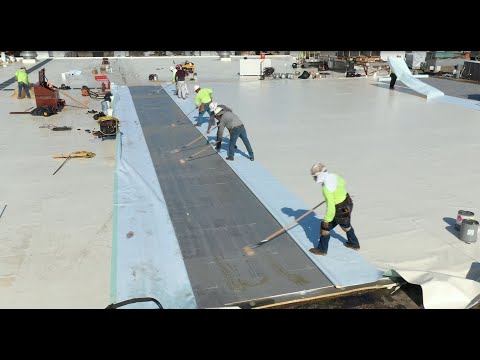
While residential roof patch kits are widely marketed, commercial roof repair is a fundamentally different undertaking. Commercial roofs are larger, steeper in some configurations, and often involve complex multi-ply systems that require specialized training and equipment. A poorly executed DIY repair on a commercial building can void manufacturer warranties, create liability exposure, and ultimately cost far more than hiring a qualified professional from the start.
Expert Tips for Extending Your Commercial Roof’s Lifespan
The best commercial roof repair strategy is one that prevents the need for extensive repairs in the first place. Follow these expert recommendations to maximize your roof’s service life:
- Schedule biannual roof inspections — ideally in spring and fall — to catch problems before they escalate
- Keep drainage systems clear of debris, leaves, and sediment to prevent ponding water
- Trim overhanging tree branches that can scratch membrane surfaces or drop debris
- Document every repair and inspection in a centralized roof management log
- Apply roof coatings as a preventive measure to restore UV protection and extend membrane life
- Address minor repairs within 30 days of discovery — delaying even small fixes dramatically increases the risk of secondary damage
These proactive habits not only extend the functional life of your commercial roof but also strengthen your position when negotiating insurance claims or planning for a future roof replacement. A well-maintained roof is one of the highest-return investments a commercial property owner can make.
Conclusion
Commercial roof repair is not just a maintenance task — it is a strategic business decision that protects your asset, your occupants, and your bottom line. By understanding the common causes of commercial roof damage, recognizing early warning signs, choosing the right repair approach for your roofing material, and partnering with a reputable commercial roofing contractor, you position your building for decades of reliable performance. The key takeaway is simple: do not wait for a leak to become a crisis. Act proactively, invest in regular inspections, and address repairs promptly to keep your commercial roof in peak condition for years to come.
Frequently Asked Questions
How much does it cost to repair a commercial roof leak?
The cost to repair a commercial roof leak typically ranges from $300 to $1,500 for localized fixes involving sealant application or small membrane patches. However, if the leak has caused significant interior water damage, insulation saturation, or structural compromise, costs can climb to $3,000 to $10,000 or more. The final price depends on leak location, roof material, accessibility, and whether underlying damage requires additional remediation.
How often should a commercial roof be inspected for potential repair needs?
Industry best practices recommend at least two commercial roof inspections per year — once in the spring after winter weather and once in the fall before storm season. Additionally, you should schedule an inspection after any major weather event such as a hailstorm, hurricane, or heavy snowfall. Buildings in harsh climates or those with older roofing systems may benefit from quarterly inspections to catch developing issues early.
Can a commercial roof be repaired instead of replaced?
In most cases, a commercial roof can be repaired rather than fully replaced, provided the underlying roof deck and structural supports are sound. Localized damage, isolated leaks, seam failures, and minor membrane deterioration are all excellent candidates for repair. However, if more than 25–30% of the roof surface is significantly damaged, or if the roof has reached the end of its expected lifespan, a full replacement may be the more cost-effective long-term solution.
What is the fastest commercial roof repair method for an active leak?
For an active leak requiring an emergency fix, the fastest method is typically a temporary patch using a commercial-grade roof sealant or reinforcing tape applied directly over the leak point. This buys time while a permanent repair is scheduled. Permanent solutions include heat-welded TPO patches, EPDM adhesive repairs, or modified bitumen torch-down patches — all of which require a professional crew and may take one to three days depending on the scope.
Does commercial roof repair void the manufacturer warranty?
This depends entirely on the roofing system and the repair method used. Many manufacturers require that all repairs be performed by authorized commercial roofing contractors using approved materials and techniques to maintain warranty coverage. Unauthorized DIY repairs, incompatible patch materials, or improper installation methods can absolutely void your warranty. Always check your warranty terms and consult your roofing manufacturer before scheduling any repair work.