


Birch trees are among the most stunning ornamental specimens you can add to any landscape, and understanding proper birch tree care is the key to keeping them healthy, vibrant, and thriving for decades. Whether you are a first-time homeowner planting a single white birch in your front yard or a seasoned gardener managing an entire grove of Betula species, the details matter enormously. Birch trees have specific needs — from soil pH preferences to moisture levels, pruning timing, and pest resistance — that set them apart from many other hardwoods. In this comprehensive guide, we will walk you through every essential aspect of birch tree maintenance, covering planting techniques, watering strategies, pruning methods, pest and disease management, and long-term care practices that experienced arborists rely on. If you want your birch trees to reach their full potential and become the crown jewels of your outdoor space, keep reading.
Why Birch Trees Deserve a Prominent Place in Your Landscape
Before diving into the hands-on care details, it helps to understand why birch trees hold such a special place in horticulture and landscaping. The Betula genus includes dozens of species native to temperate and boreal regions across the Northern Hemisphere. Their distinctive peeling bark — ranging from stark white in paper birch to warm copper in river birch — provides year-round visual interest, especially during winter months when most deciduous trees stand bare. Birch foliage also offers elegant, delicate canopy textures and spectacular golden-yellow fall color that few other trees can match. Beyond aesthetics, birch trees support local ecosystems by providing habitat and food for birds, pollinators, and beneficial insects. However, their beauty comes with a price: birch trees are relatively short-lived compared to oaks or maples, typically surviving 40 to 80 years depending on the species and growing conditions. Proper birch tree care directly influences whether your tree reaches the upper end of its natural lifespan or succumbs prematurely to stress, disease, or environmental factors.
How to Plant and Establish Birch Trees the Right Way
Successful birch tree care begins at planting. Many homeowners make the mistake of treating birch trees like any ordinary sapling, but these species demand specific site conditions from day one. Choosing the right location and preparing the soil properly can mean the difference between a tree that flourishes and one that struggles for years.
Choosing the Right Birch Species for Your Climate
Not all birch varieties perform equally well in every region. Silver birch (Betula pendula) thrives in cooler northern climates and handles cold winters with ease. River birch (Betula nigra) is more heat-tolerant and performs well in the southeastern United States, where temperatures regularly climb above 90°F. Paper birch (Betula papyrifera) is a cold-hardy favorite across the Northeast and Upper Midwest. When selecting a birch species, consider your USDA hardiness zone, average rainfall, summer heat levels, and soil type. Matching the species to your region dramatically reduces the maintenance burden and increases the tree’s long-term vigor.
Best Planting Practices for Birch Trees
- Timing matters. Plant birch trees in early spring or early autumn when soil temperatures are moderate and the tree is dormant. This minimizes transplant shock and gives the root system time to establish before extreme weather arrives.
- Pick a partially shaded site. Birch trees naturally grow as understory species in the wild, meaning they prefer dappled sunlight or morning sun with afternoon shade. Full, intense afternoon sun combined with dry soil is one of the fastest paths to birch decline.
- Amend the soil with organic matter. Birch trees prefer slightly acidic, moist, well-drained soil with a pH between 5.0 and 6.5. If your soil is alkaline, consider incorporating elemental sulfur or peat moss to lower the pH over time.
- Dig a wide, shallow planting hole. The hole should be two to three times wider than the root ball but no deeper than the root ball’s height. Planting too deeply is one of the most common causes of birch tree decline.
- Mulch generously. Apply a three-to-four-inch layer of organic mulch — such as wood chips or shredded bark — extending out to the drip line. Keep mulch a few inches away from the trunk to prevent moisture buildup and bark rot.
Birch Tree Watering and Soil Requirements
Water management is arguably the single most critical element of birch tree care. Birch trees have shallow, fibrous root systems that dry out quickly, especially during hot summer months. Unlike deep-rooted species like oaks, birch trees cannot tap into deep water reserves and rely heavily on consistent surface moisture.
During the first two to three years after planting, your birch tree needs deep watering at least once per week — more frequently during prolonged heat waves or drought periods. A slow, steady trickle from a garden hose at the base of the tree for 20 to 30 minutes is far more effective than a brief sprinkler session. The goal is to saturate the root zone to a depth of 12 to 18 inches.
As the tree matures, it becomes somewhat more drought-resistant, but it will still benefit from supplemental irrigation during extended dry spells. One of the most telling signs of water stress in birch trees is premature leaf yellowing and early autumn leaf drop. If you notice this, increase your watering frequency immediately and check the soil moisture at a depth of four to six inches.
Pruning Birch Trees for Health and Structure
Pruning birch trees requires a thoughtful approach. Because birch trees bleed sap heavily when pruned during late winter or early spring — a process called exudation — many gardeners worry that pruning causes harm. While the sap bleeding is unsightly, it is generally not fatal to the tree. However, timing your pruning correctly can minimize sap loss and reduce the risk of attracting boring insects, which are drawn to the scent of fresh birch sap.
The best time to prune birch trees is in mid to late summer, typically July through August, when sap flow has slowed significantly. Avoid pruning after the first frost, as open wounds heal more slowly in cold conditions.
Pruning Techniques That Promote Long-Term Health
- Remove dead, damaged, or diseased branches whenever you spot them, regardless of the season. Clean cuts promote faster healing and reduce the risk of fungal infection spreading through the canopy.
- Thin the canopy selectively. Birch trees benefit from an open crown structure that allows air circulation and light penetration. Remove crossing branches, inward-growing shoots, and any branches competing for the central leader.
- Never remove more than 25% of the live crown in a single year. Heavy pruning stresses birch trees and can trigger a cascade of secondary health problems, including pest infestations and disease susceptibility.
- Use sharp, sanitized tools. Sterilize pruning blades with rubbing alcohol or a diluted bleach solution between cuts, especially when removing diseased branches, to prevent spreading pathogens to healthy tissue.
Pest and Disease Management for Birch Trees
Birch trees face a unique set of pest and disease pressures that every caretaker should understand. The bronze birch borer (Agrilus anxius) is arguably the most destructive insect pest affecting birch trees across North America. These wood-boring beetles tunnel beneath the bark, disrupting the tree’s vascular system and causing canopy dieback that often progresses from the upper crown downward. Infected trees display D-shaped exit holes in the bark, split bark, and yellowing foliage in the upper branches.
Another common pest is the birch leaf miner, a small sawfly larva that feeds inside the leaves, creating visible brown blotches and weakening the tree over time. While leaf miner damage is mostly cosmetic and rarely fatal, heavy infestations can stress an already compromised tree.
On the disease side, birch trees are susceptible to several fungal infections, including birch leaf spot (Marssonina betulae), which causes dark spots on leaves that eventually lead to premature defoliation, and anthracnose, which can cause twig blight and branch dieback. Maintaining good cultural practices — proper watering, adequate spacing, and regular pruning — is the most effective way to prevent fungal diseases from taking hold.
For bronze birch borer prevention, keeping your tree healthy and stress-free is the best defense. Stressed, water-deprived birch trees are far more attractive to borers than vigorous, well-maintained specimens. In severe cases, systemic insecticides containing imidacloprid can be applied as a soil drench in early spring, but this should be done under the guidance of a certified arborist.
Comparing Popular Birch Species for Gardeners
When planning a birch planting project, understanding how different species compare side by side helps you make informed decisions. The table below summarizes the key characteristics of three popular birch varieties.
| Characteristic | Silver Birch (B. pendula) | River Birch (B. nigra) | Paper Birch (B. papyrifera) |
| Hardiness Zone | 2–6 | 4–9 | 2–7 |
| Bark Color | White with dark diamond patches | Peeling copper to cinnamon | Bright white, papery |
| Mature Height | 40–50 ft | 40–70 ft | 50–70 ft |
| Heat Tolerance | Low | High | Moderate |
| Common Pests | Bronze birch borer | Birch leaf miner | Bronze birch borer |
| Soil pH Preference | 5.0–6.5 | 5.0–7.0 | 5.0–6.5 |
| Lifespan (years) | 40–60 | 50–80 | 60–80 |
Expert Tips for Long-Term Birch Tree Health
Caring for birch trees over the long haul requires consistency and attention to detail. Here are some expert-level recommendations that experienced arborists and horticulturists swear by:
- Feed your birch trees with a slow-release, acidic fertilizer formulated for acid-loving plants in early spring. Avoid high-nitrogen fertilizers that promote lush, tender growth attractive to borers.
- Protect the trunk from mechanical damage. Birch bark is thin and easily injured by lawn mowers, string trimmers, and vehicles. Wounding the bark creates entry points for borers and fungal pathogens. Install a trunk guard or maintain a mulched buffer zone around the base of the tree.
- Monitor soil moisture regularly. Invest in a simple soil moisture meter and check the root zone depth every few days during the growing season. Birch trees send clear distress signals — wilting leaves, crispy leaf edges, and premature color change — when they are underwatered.
- Consider companion planting. Shade-tolerant ground covers like hostas, ferns, and creeping juniper planted beneath birch trees help retain soil moisture, regulate soil temperature, and reduce weed competition that stresses the tree.
- Schedule annual health assessments with a certified arborist. Professional tree care providers can identify early signs of pest infestation, soil compaction, root damage, and structural weaknesses before they become serious, costly problems.
Frequently Asked Questions About Birch Tree Care
How often should I water my birch tree during summer?
During the summer months, established birch trees should receive deep watering every seven to ten days, while younger trees planted within the last three years need watering every five to seven days. Adjust the frequency based on rainfall and soil conditions. Sandy soils require more frequent irrigation, while clay soils retain moisture longer and may need less supplementation.
Why is the bark on my birch tree peeling, and is it normal?
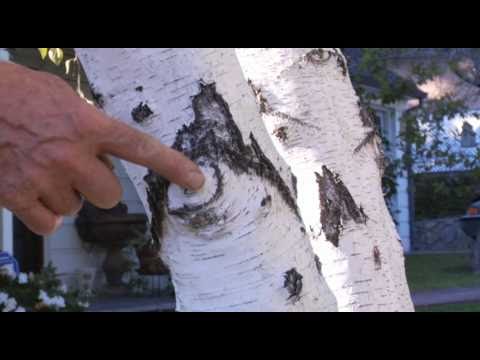
Peeling bark is a natural and healthy characteristic of many birch species and contributes to the tree’s iconic appearance. As the outer bark grows, it naturally fissures and peels away to reveal the smoother inner bark beneath. However, if the peeling bark is accompanied by sunken cankers, oozing sap, or visible insect galleries beneath the loose bark, this may indicate a bronze birch borer infestation or a fungal canker disease that requires immediate attention.
Can I grow a birch tree in full sun?
While birch trees can survive in full sun, they are far less tolerant of prolonged direct sunlight — especially in hot climates — compared to partial shade conditions. Full sun increases soil temperatures and accelerates moisture evaporation from the shallow root zone, putting the tree under chronic stress. If full sun is your only option, choose a heat-tolerant species like river birch and commit to consistent, deep watering throughout the growing season.
What is the best fertilizer for birch trees?
The best fertilizer for birch trees is a slow-release formulation with an acidifying component and a balanced N-P-K ratio — something in the range of 12-4-8 or similar — designed for acid-loving trees and shrubs. Apply in early spring as the soil begins to warm, and avoid fertilizing after midsummer, which can stimulate late-season growth vulnerable to winter damage.
How do I save a birch tree with bronze birch borer damage?
Saving a birch tree from bronze birch borer damage depends on the severity of the infestation. Light infestations can sometimes be managed by improving tree vigor through proper watering, mulching, and fertilization, which helps the tree compartmentalize the damage. For moderate to severe infestations, a certified arborist can apply a systemic insecticide such as emamectin benzoate as a trunk injection in late spring or early summer, targeting the larvae inside the wood. Early intervention is critical — once more than 30% of the crown shows dieback, the tree may be beyond recovery.
Final Thoughts on Mastering Birch Tree Care
Birch trees reward attentive, knowledgeable caretakers with extraordinary beauty that few other landscape trees can rival. From the moment you select the right species for your region to the ongoing practices of watering, pruning, pest monitoring, and soil management, every decision you make shapes the health and longevity of your birch tree. The key takeaway is simple but powerful: birch trees thrive when their specific environmental needs are met consistently. They are not the easiest trees to care for, but with the right approach and a commitment to regular maintenance, they become resilient, spectacular additions to any property. Start applying these birch tree care strategies today, and you will enjoy the graceful beauty of your birch trees for many years to come.